
The US Military’s Engagement in Operation Desert Shield
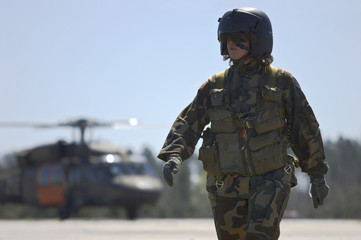
An established presence in the Lexington, South Carolina business community. Having served as a pilot instructor and pilot with the US Air Force, Ricky Mantei completed three dozen combat missions, including a tour during Desert Storm.
According to an Air Force Magazine article, by 1990, Iraq under Saddam Hussein possessed the Arab world’s most advanced military. The consensus of the CIA, Pentagon, and State Department was that Iraq did not pose an urgent threat to Saudi Arabia and Kuwait, as its capabilities were spent from an extended engagement against Iran in the 1980s. Despite the Middle East’s increasing presence on the world stage since the 1970s, the region was still not considered as critical to US defense strategy within a Cold War context as the Pacific and European theaters.
This calculus changed overnight in August 2, 1990, when Saddam Hussein invaded Kuwait and seemed poised to broaden the attack into one that would threaten Saudi Arabia’s oil-rich Eastern Province. This compelled President George H. W. Bush to draw a line and demand Iraq’s immediate withdrawal from Kuwait, with the memorable quote, “This will not stand.” Accompanying this demand was the arrival, at Saudi King Fahd’s request, of several key military components. These included F-15s from Langley Air Force Base, a USAF C-141 for airlift control, and US Army 82nd Airborne Division elements.
The stage was set for Desert Shield, an operation that morphed into Desert Storm, in which the US Air Force would take a critical tactical role under the leadership of US Central Command and Army General H. Norman Schwarzkopf.
 Ricky Mantei